
Which Dust Collector Fits Cement Plant Dust Control?
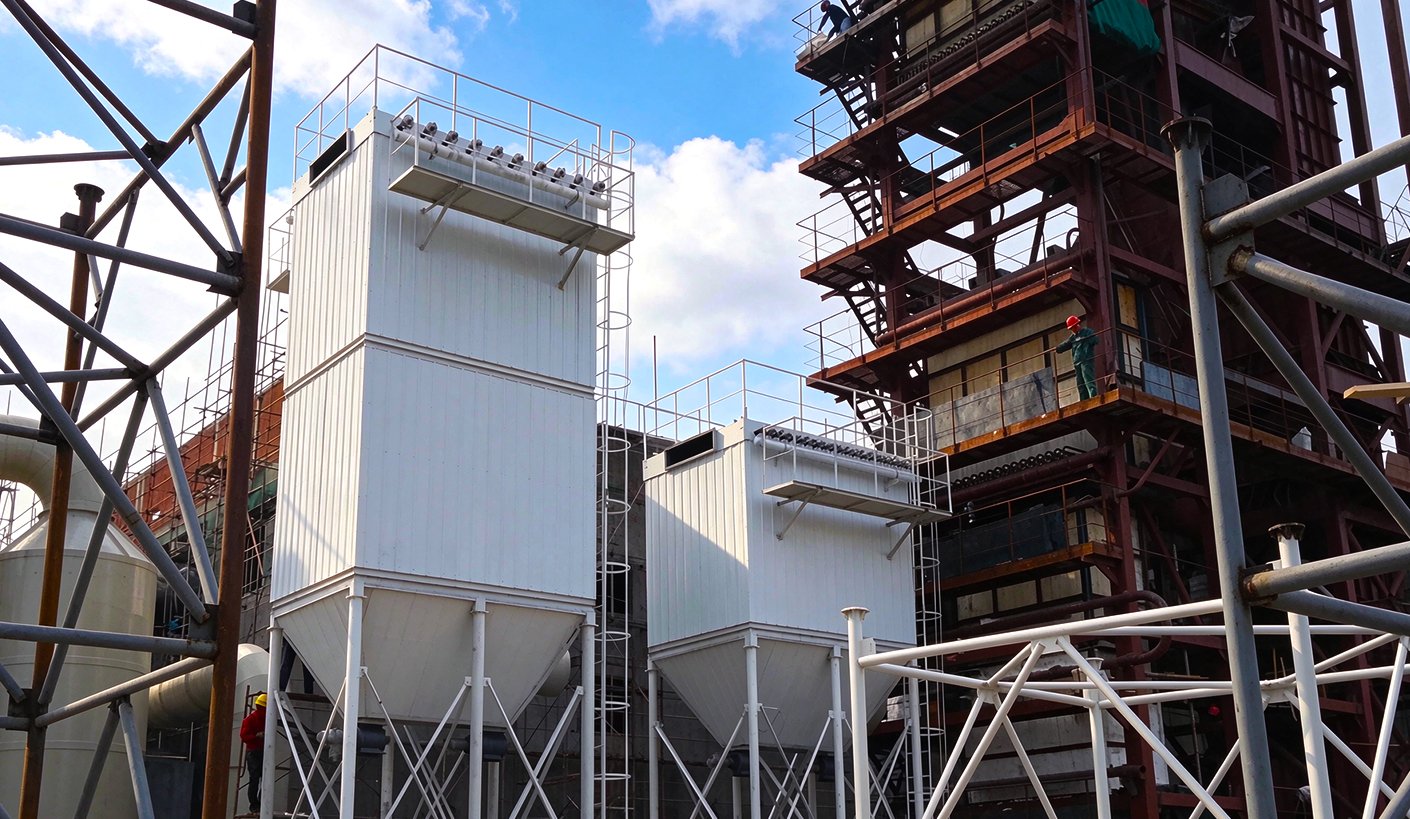
Cement plants generate dust at many points, from raw material crushing and grinding to kiln operation, clinker cooling, cement milling, packaging, and bulk loading. Because dust characteristics change across these stages, there is no single “best” collector for every situation. The right choice depends on particle size, gas temperature, moisture, dust concentration, explosion risk, and local emission limits.
Pulse-Jet Baghouse Dust Collector
A pulse-jet baghouse is one of the most widely used solutions for cement plant dust control. Dust-laden gas passes through fabric filter bags, while fine particles are captured on the bag surface. Periodic compressed-air pulses clean the bags and keep pressure drop stable.
Baghouses are especially effective for fine cement dust, including PM2.5. With suitable filter media such as PPS, PTFE, glass-fiber, or P84-based fabrics, they can consistently achieve very low outlet concentrations and support ultra-low emission targets. They are commonly applied to cement mills, packing plants, silo vents, transfer points, and kiln exhaust systems.
Key advantages:
High filtration efficiency for submicron particles
Stable performance even when dust properties vary
Suitable for strict emission limits
Modular design allows online maintenance
The main considerations are filter bag life, gas temperature control, and protection against moisture condensation. Baghouses must also be carefully designed for abrasive or sticky dust.


Electrostatic Precipitator
An electrostatic precipitator uses a high-voltage electric field to charge dust particles and collect them on plates. It is well suited to large gas volumes and high-temperature flue gas, making it a traditional choice for kiln head and kiln tail applications.
Electrostatic precipitators usually have lower pressure drop and can handle harsh, high-volume exhaust streams. However, their performance can be affected by dust resistivity, moisture, and process fluctuations. For very fine particles, additional polishing filtration may be needed to meet tighter limits.
Key advantages:
Strong capacity for large airflows
Suitable for high-temperature kiln exhaust
Lower pressure drop than many fabric filters
Long service life with proper maintenance
Hybrid and Supporting Options
For demanding cement plant applications, electrostatic-bag hybrid collectors are increasingly considered. The electrostatic section removes coarse particles first, reducing the load on the fabric filter section. This combination can improve stability, extend bag life, and help maintain low emissions under variable operating conditions.
Cyclone pre-separators are also useful as a first stage for high-concentration or coarse dust streams, such as crushing and conveying points. They do not usually replace high-efficiency filtration but can protect downstream equipment and reduce maintenance costs.