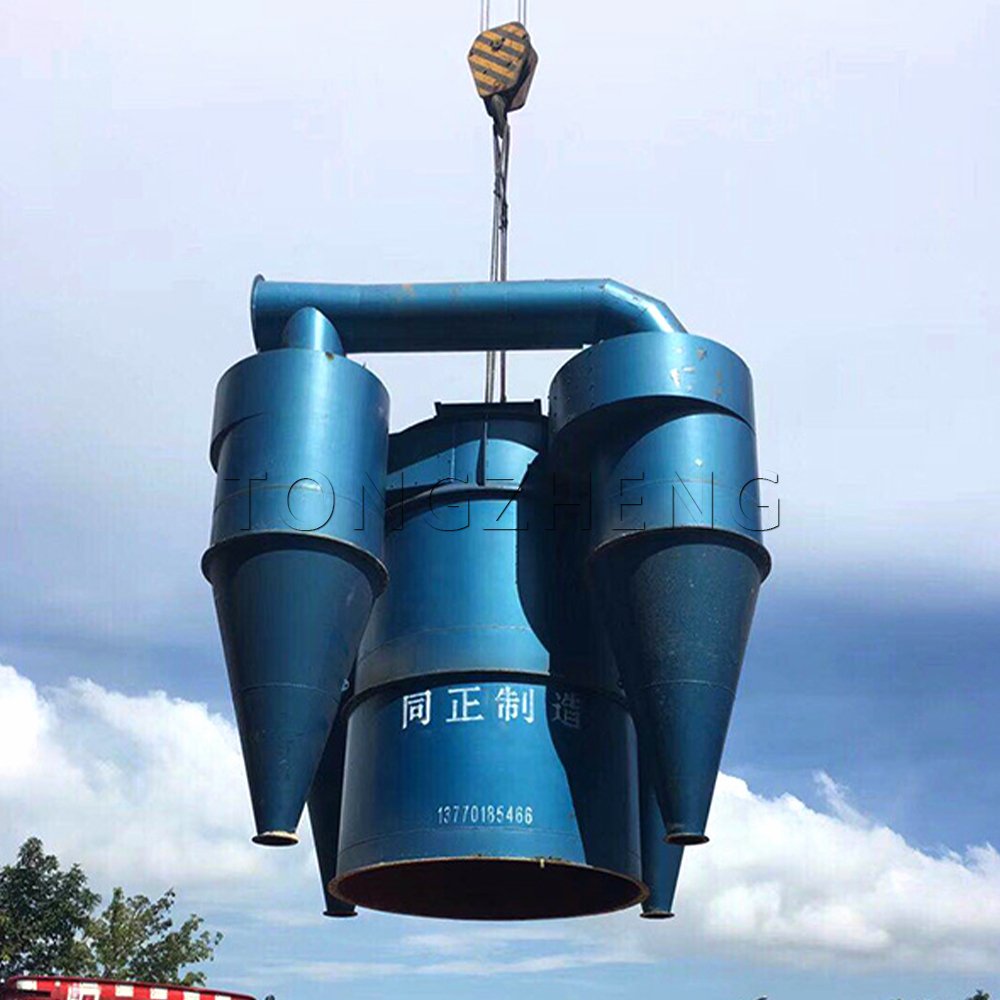
Centrifugal Powder Classifier
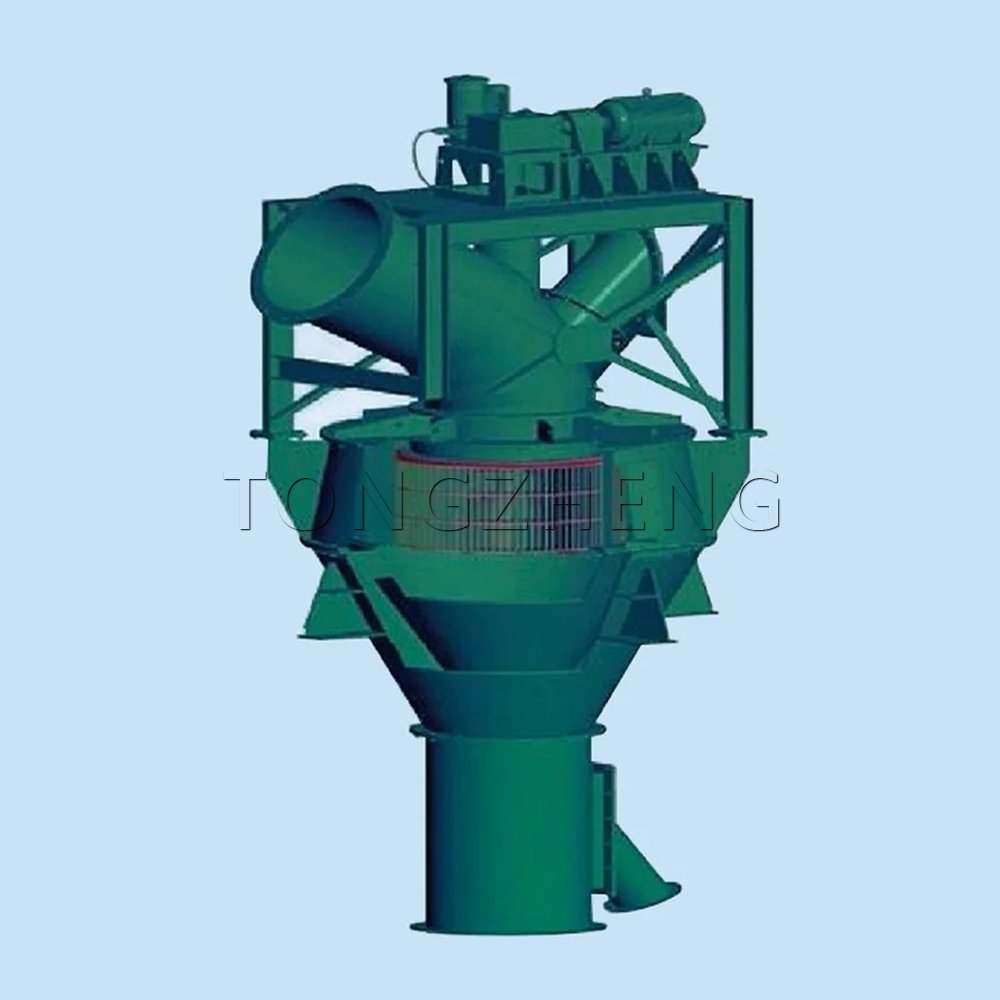
Centrifugal Powder Classifier is key equipment for material classification in cement, mining, chemical and other industries.
- Trademark / Brand: TONGZHENG
- Place of Origin: Yancheng, Jiangsu, China
- Type: Cyclone Air Separator
- Usage: Fine powder classification in grinding circuits
Categories: Separation, Classification & Grinding
Product details
Product Description
Product Overview
Centrifugal Powder Classifier (also called centrifugal classifier) is key equipment for material classification in cement, mining, chemical and other industries. It mainly separates ground materials into coarse powder and fine powder by particle size to realize closed-circuit grinding and improve grinding efficiency.
Working Principle
The core working principle of the centrifugal powder classifier relies on the combined effect of centrifugal force, airflow drag force and gravity. A classification force field is formed by the high-speed rotating rotor to achieve precise separation of coarse and fine powder.
Its working process consists of three key stages: feeding & pre-dispersion, core classification, and finished powder collection.
1. Feeding and Pre-dispersion
Raw mixed powder from the ball mill falls through the feed inlet onto the high-speed rotating spreading disc in the middle of the machine.
1. Driven by the centrifugal force of the spreading disc, the powder is evenly thrown toward the inner wall of the cylinder to form a uniform annular material curtain.
2. Meanwhile, circulating airflow delivered upward by the bottom fan passes through the material curtain to disperse the powder preliminarily. Large particles fall back along the cylinder wall first under gravity to complete pre-classification.
2. Core Classification
The dispersed powder enters the classification zone formed by the rotor and guide vanes, which is the core area for precise separation:
1. Force balance: The high-speed rotating rotor generates strong centrifugal force to throw powder outward, while upward airflow produces upward drag force to carry fine powder upwards. The balance between these two forces determines the cut particle size.
2. Coarse powder separation: For coarse particles with larger size and mass, centrifugal force exceeds drag force. They are thrown to the outer side of guide vanes. Without airflow support, they fall down along the cylinder wall and return to the ball mill through the return port for re-grinding.
3. Fine powder screening: For fine particles with smaller size and mass, drag force exceeds centrifugal force. They follow the airflow through rotor blades and enter the cyclone collection zone at the upper section.
3. Finished Product Collection and Air Circulation
1. Fine powder collection: The fine-powder-laden airflow enters the cyclone separator on the top of the machine. Inside the cyclone barrel, fine powder is thrown to the cylinder wall under centrifugal force, falls to the finished discharge outlet and becomes qualified product.
2. Air reuse: After being pressurized by the fan, part of the cleaned air returns to the cylinder as circulating air for re-classification; the rest is treated by dust collectors and discharged up to emission standards.
Applications
- Building Materials Industry: Cement clinker grinding, fly ash classification, slag micropowder production and limestone powder processing. It is essential equipment for improving product strength and durability.
- Environmental Protection: Resource utilization of industrial solid wastes such as power plant fly ash and steel plant slag, converting low-value raw ash into high-value-added micropowder.
- Chemical Industry: Classification of fine chemical powders including calcium carbonate, talcum powder and pigments, meeting strict requirements on particle size distribution for coatings, plastics, rubber and related sectors.
- Metallurgical Industry: Classification and purification of metal ore powder and metallurgical slag to raise raw material utilization rate and product purity.