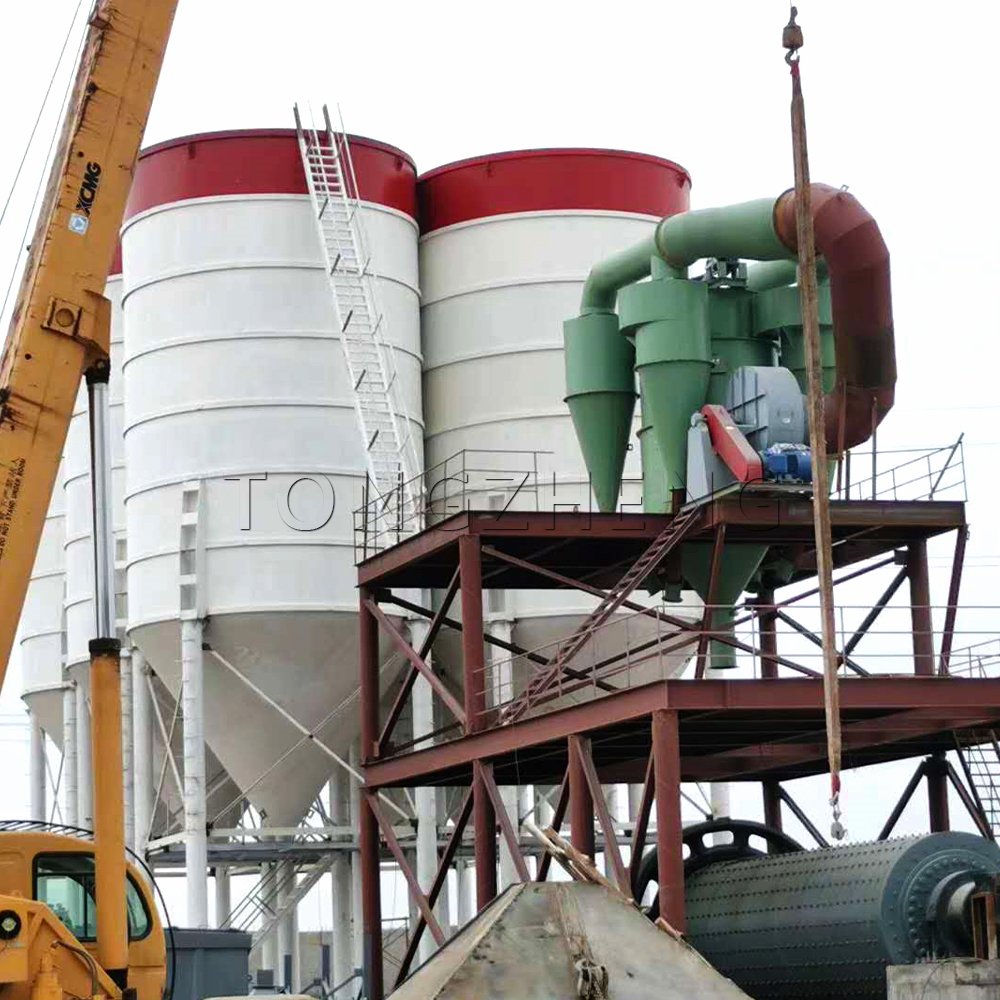
Manufactured‑Sand Powder Classifier
Manufactured‑Sand Powder Classifier separates excessive off‑specification fines from manufactured sand by means of air classification, hydraulic washing or other methods.
Categories: Separation, Classification & Grinding
Product details
Product Description
Product Overview
Manufactured‑Sand Powder Classifier separates excessive off‑specification fines from manufactured sand by means of air classification, hydraulic washing or other methods. It controls the fineness modulus and fine‑stone‑powder content of finished sand to satisfy national standards and engineering requirements for concrete, mortar and other applications.
Performance Characteristics
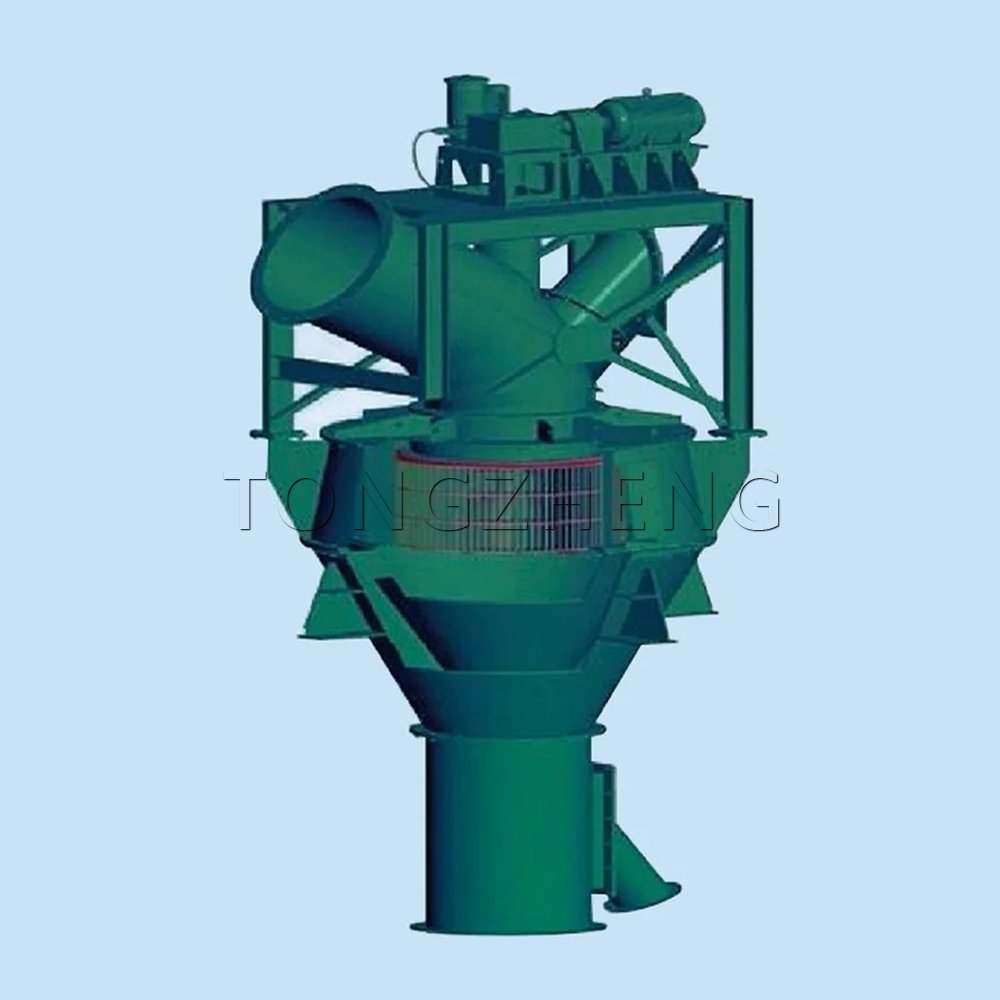
Vortex / Rotor‑Type Classifier
- Working Principle: Raw material enters from the top and falls onto the rotating spreading disc for uniform dispersion. In upward airflow generated by the fan, fine particles are carried upward and pass through the forced‑vortex classification zone formed by the cage rotor. The rotor speed is adjustable; the cut‑off particle size is controlled by shifting the force balance between centrifugal force and airflow drag force. Qualified fine stone powder is conveyed by airflow to dust collectors for collection, while coarse sand is discharged from the bottom.
- Features: High classification precision, high efficiency, convenient fineness adjustment (only by adjusting rotor speed), relatively low energy consumption.
Cyclone / Triple‑Separation Classifier
- Working Principle: Material is dispersed by airflow for primary classification under combined centrifugal‑force and gravity effects. Multiple cyclone separators are normally equipped to realize multi‑product separation within one single unit.
- Features: Relatively simple structure; capable of producing coarse, medium and fine fractions simultaneously, yet inferior adjustment sensitivity compared with rotor‑type classifiers.
Combined‑Type Classifier
It integrates air classification with vibratory screening. Oversized coarse particles are removed first by screening, followed by air classification for fine fractions. Suitable for feedstock with extremely high fines content or complex material properties.
Technical Specifications
| Model | Product Fineness R0.075 (%) |
Rotor Speed (r/min) |
Motor Power (kW) |
Capacity (t/h) |
|---|---|---|---|---|
| TZ-SF-I(N250) | 0-5 | 150-300 | 5.5 | 15-30 |
| TZ-SF-II(N350) | 0-5 | 130-280 | 7.5 | 30-50 |
| TZ-SF-III(N500) | 0-5 | 120-260 | 7.5 | 50-80 |
| TZ-SF-IV(N750) | 0-5 | 110-250 | 11 | 80-110 |
| TZ-SF-V(N1000) | 0-5 | 100-230 | 15 | 110-150 |
| TZ-SF-VI(N1250) | 0-5 | 90-210 | 18.5 | 150-200 |
| TZ-SF-VII(N1500) | 0-5 | 80-200 | 22 | 200-250 |
| TZ-SF-VIII(N2000) | 0-5 | 70-180 | 30 | 240-300 |
| TZ-SF-IX(N2500) | 0-5 | 60-160 | 37 | 280-350 |
| TZ-SF-X(N3000) | 0-5 | 50-150 | 45 | 350-450 |
| TZ-SF-XI(N3500) | 0-5 | 50-110 | 55 | 450-550 |
| TZ-SF-XII(N4000) | 0-5 | 50-110 | 55 | 550-600 |
Note: Specifications are based on the standard product series; site-specific requirements to be confirmed
How to Select a Suitable Classifier?
The following factors shall be comprehensively considered for equipment selection:
1. Raw‑material properties: Rock type (hardness, abrasiveness), initial fine‑powder content, moisture content (dry‑process requires dry feed material).
2. Product requirements: Target fineness modulus, allowable range of stone‑powder content, whether dry stone‑powder recovery is required.
3. Process and site conditions:
- Dry‑process: Vortex‑type classifier. Applied for fully dry‑type sand‑making production lines; supporting dust‑removal system (pulse dust collector) is mandatory.
- Wet‑process: Bucket‑wheel or spiral sand washer. A fine‑sand recovery unit must be matched to improve sand yield.
- Semi‑dry‑process: Limited water addition for dust suppression during screening stage; air classification can still be adopted in downstream sections as a compromise solution.
4. Environmental‑protection requirements: Dry‑process produces no wastewater yet demands strict dust control; wet‑process generates wastewater discharge, requiring sedimentation tanks or wastewater‑treatment facilities.
5. Capital & operating costs: Dry‑process system may demand higher initial investment, but features low running cost plus extra revenue from by‑product powder. Wet‑process has relatively lower initial investment; water consumption, power consumption and subsequent waste‑treatment expenses should be counted in total cost.